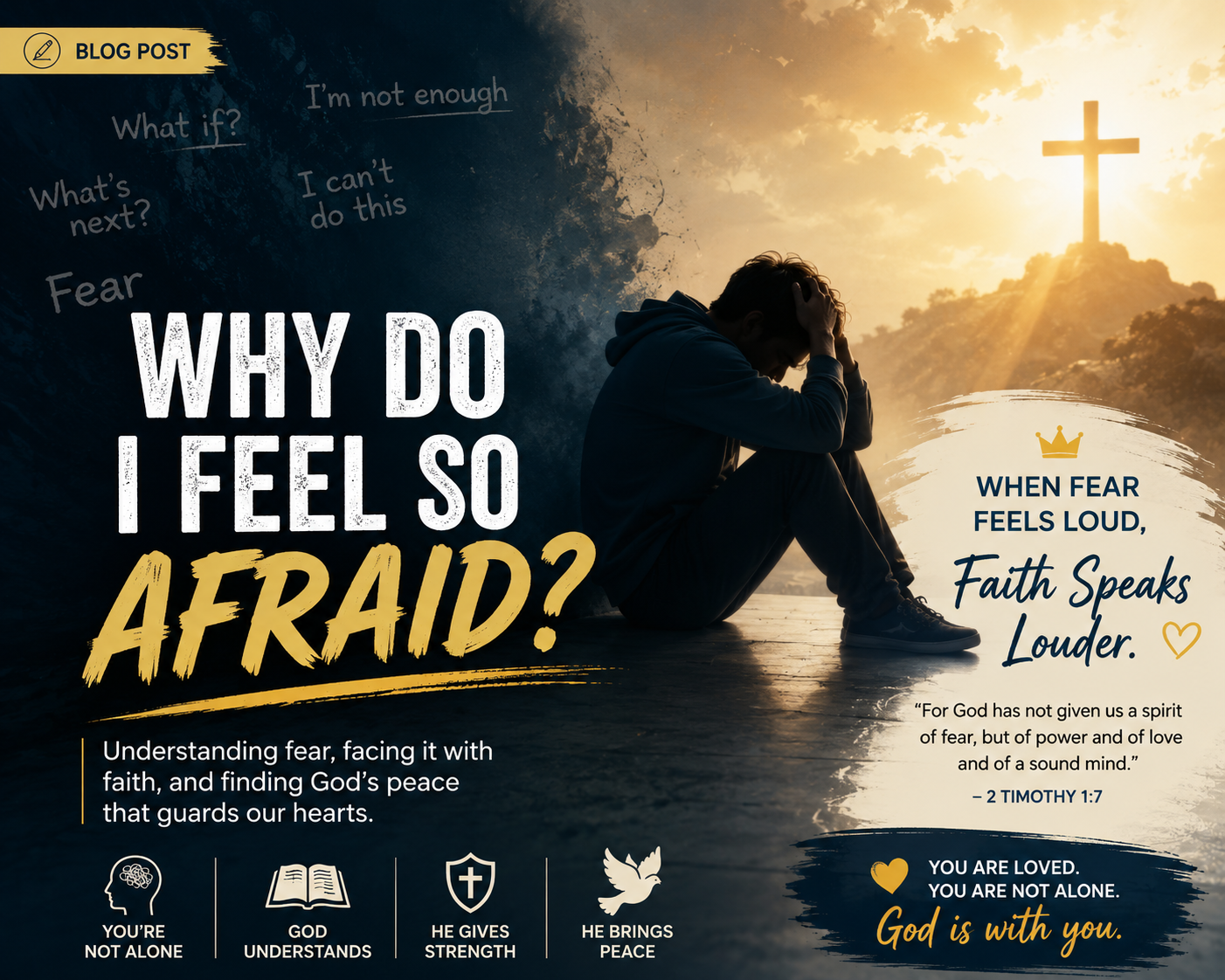
Feeling afraid can be overwhelming and isolating. It's a feeling that many of us experience at different times in our lives. Whether it's fear of the unknown, anxiety about the future, or dread over specific situations, it’s important to acknowledge that these feelings are valid. You are not alone in this struggle. Many people share this experience, and God sees your fears and cares deeply for you.
In the Bible, we find a distinction between healthy caution and paralyzing fear. Healthy caution can often protect us from danger and guide wise decisions. However, paralyzing fear can prevent us from living fully and trusting God. The Scriptures remind us that while fear is a natural human emotion, it doesn’t have to control our lives. God calls us to step out in faith, even when we feel afraid.
2 Timothy 1:7 tells us, “For God gave us a spirit not of fear but of power and love and self-control.” This verse reassures us that fear is not from God; instead, He equips us with strength and love. Additionally, Isaiah 41:10 encourages us with the promise, “Fear not, for I am with you; be not dismayed, for I am your God; I will strengthen you, I will help you, I will uphold you with my righteous right hand.”
There are many reasons why we may experience fear, including:
- Uncertainty about the future: The unknown can be daunting, and worries about what lies ahead often lead to fear.
- Past experiences: Traumatic or negative experiences can create a deep-seated fear that influences our current feelings and reactions.
- Pressure to succeed: The expectations we place on ourselves or that others place on us can create anxiety and fear of failure.
- Isolation: Feeling alone or disconnected from others can intensify feelings of fear and vulnerability.
- Influences from media: Constant exposure to news or social media showcasing negative events can heighten our fears and anxieties.
In times of fear, it's essential to remember the hope we have in the gospel. Jesus invites us to bring our fears and worries to Him. He offers us peace that surpasses all understanding (Philippians 4:7) and the assurance that He is with us in every situation.
As you navigate your fears, here are some practical steps to consider:
1. Pray: Bring your fears to God in prayer. Be honest about how you feel and ask for His comfort and strength.
2. Read Scripture: Spend time in God’s Word. Verses that speak of His love and faithfulness can remind you that you are not alone.
3. Talk to someone: Share your fears with a trusted friend, family member, or pastor. Community can provide support and encouragement.
4. Seek professional help: If your fears feel overwhelming, it may be helpful to speak with a Christian counselor who can guide you with care and wisdom.
Trust that God is with you in your fear. He loves you deeply and desires for you to experience peace and joy in Him.
Let’s pray together:
“Dear Lord, I come to You with my fears and anxieties. I ask for Your peace to fill my heart. Help me to trust in Your promises and to lean on You in times of uncertainty. Thank You for being my refuge and strength. In Jesus’ name, Amen.”